A card deck is a small product made by a long sequence of machines. Knowing which steps are in house explains why a specification change moves the schedule, and why a deck can be corrected before it is a thousand decks.
Printing
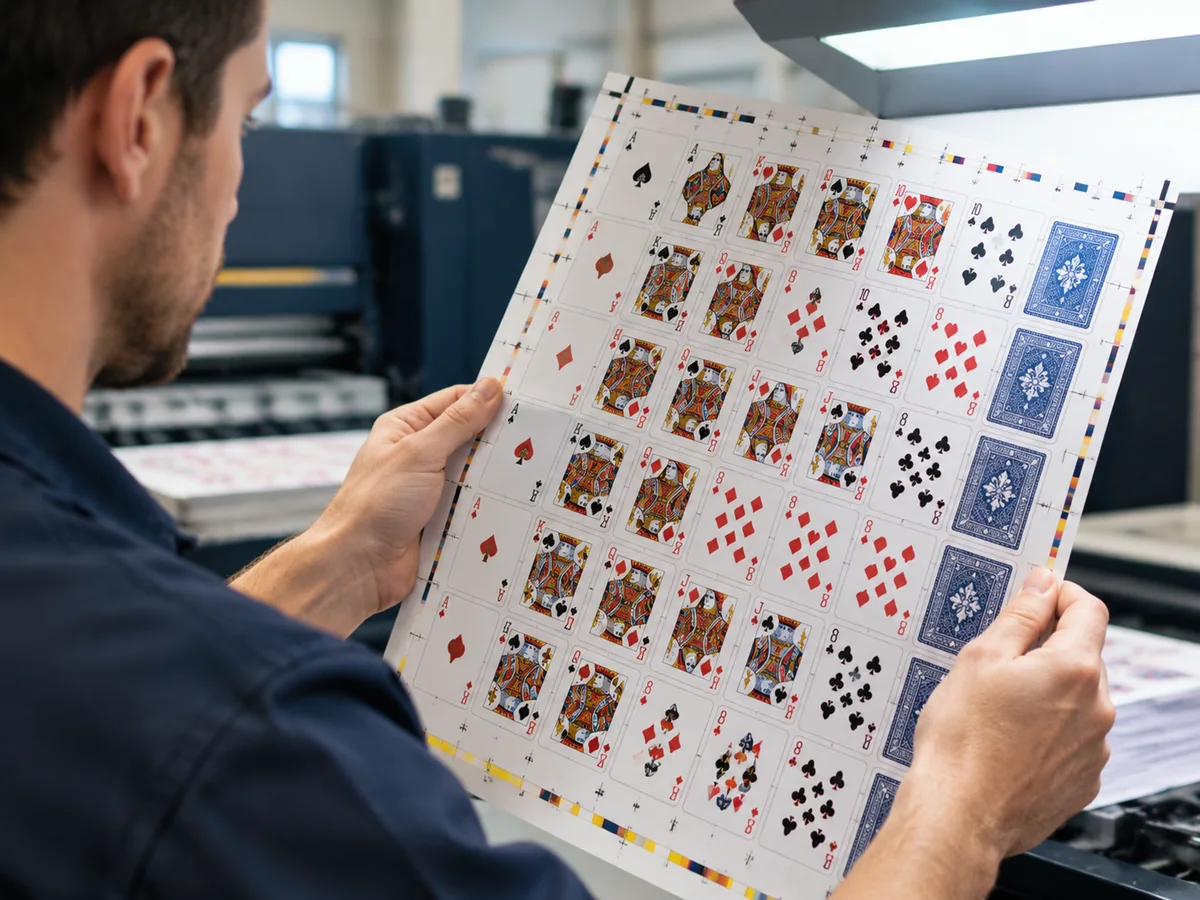
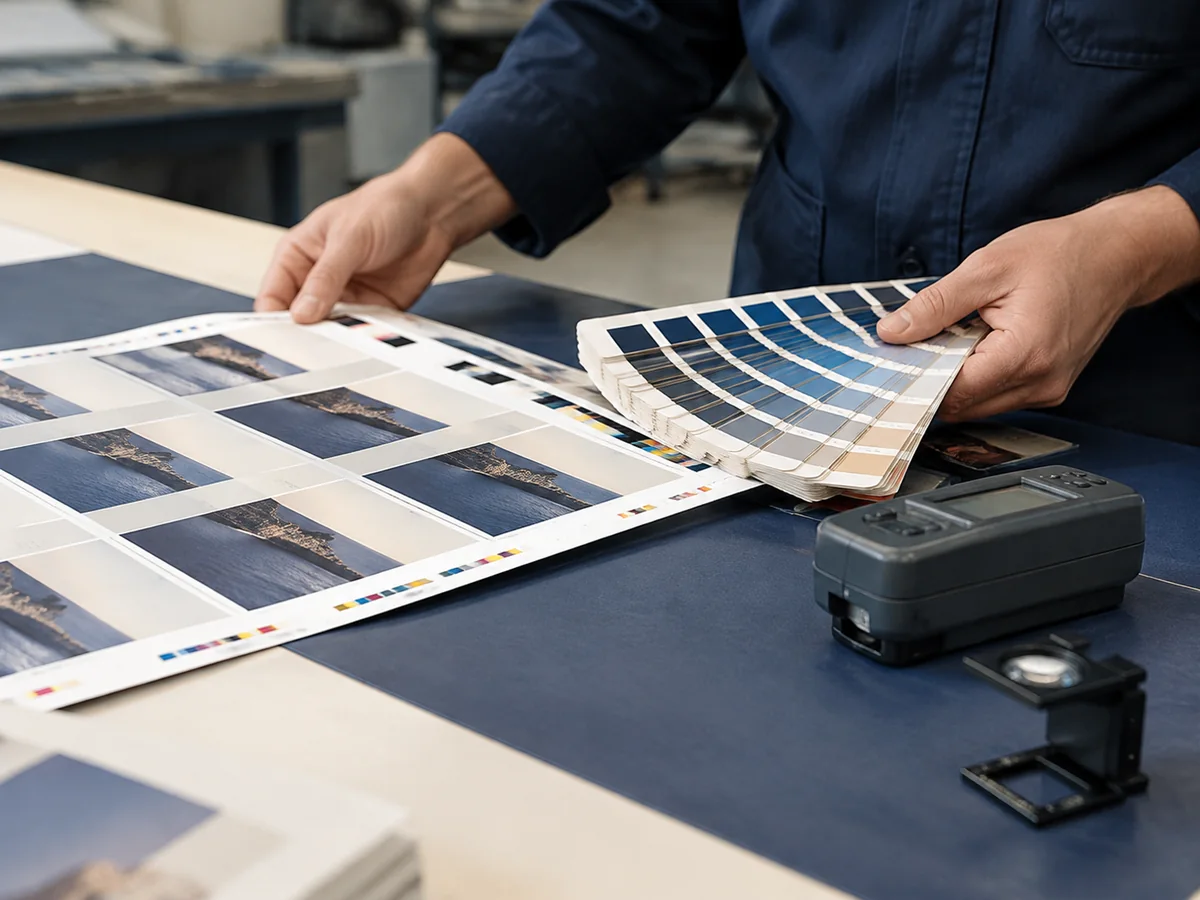
Sheets are printed in CMYK, with spot colours added where a brand colour has to be exact. Multiple cards are imposed on one sheet and cut apart later, which is why the card size has to be fixed before plates are made.
Coating and laminating
The finish is applied to the printed sheet: matte, gloss, soft touch or a linen-textured laminate. This pass is what gives a deck its shuffle feel, and it has to cure before cutting. See card finishes for how each one behaves.
Foil, spot UV and embossing
Decorative passes are run after the base print, each with its own die or screen. They are the reason a deck with foil on the box and gilt edges takes longer than a plain one, even at the same quantity.
Die cutting
Cards are cut to the trim size from a die made for the project. Rounded corners, notches and custom shapes are cut in the same operation; a new trim size means a new die, which is a one-off cost rather than a per-deck one.
Box making and packing
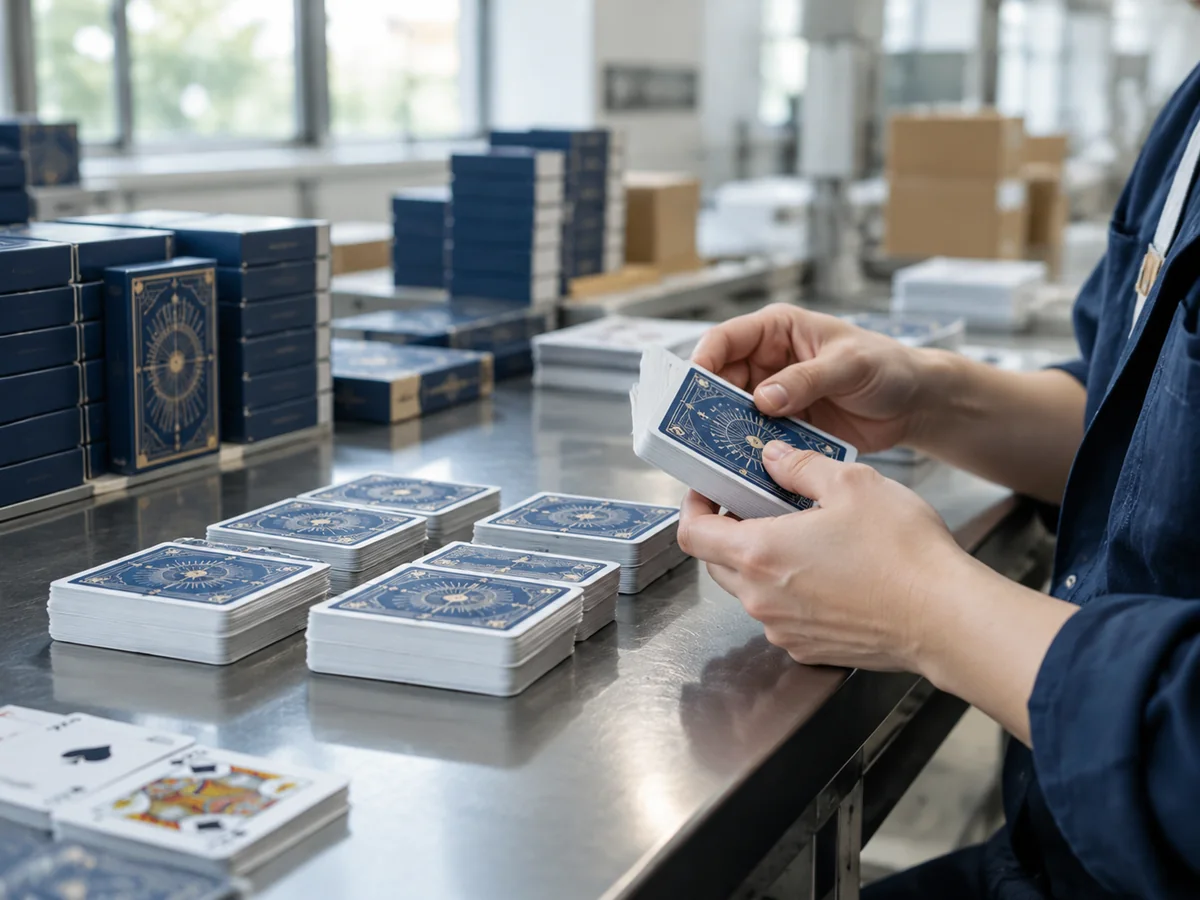
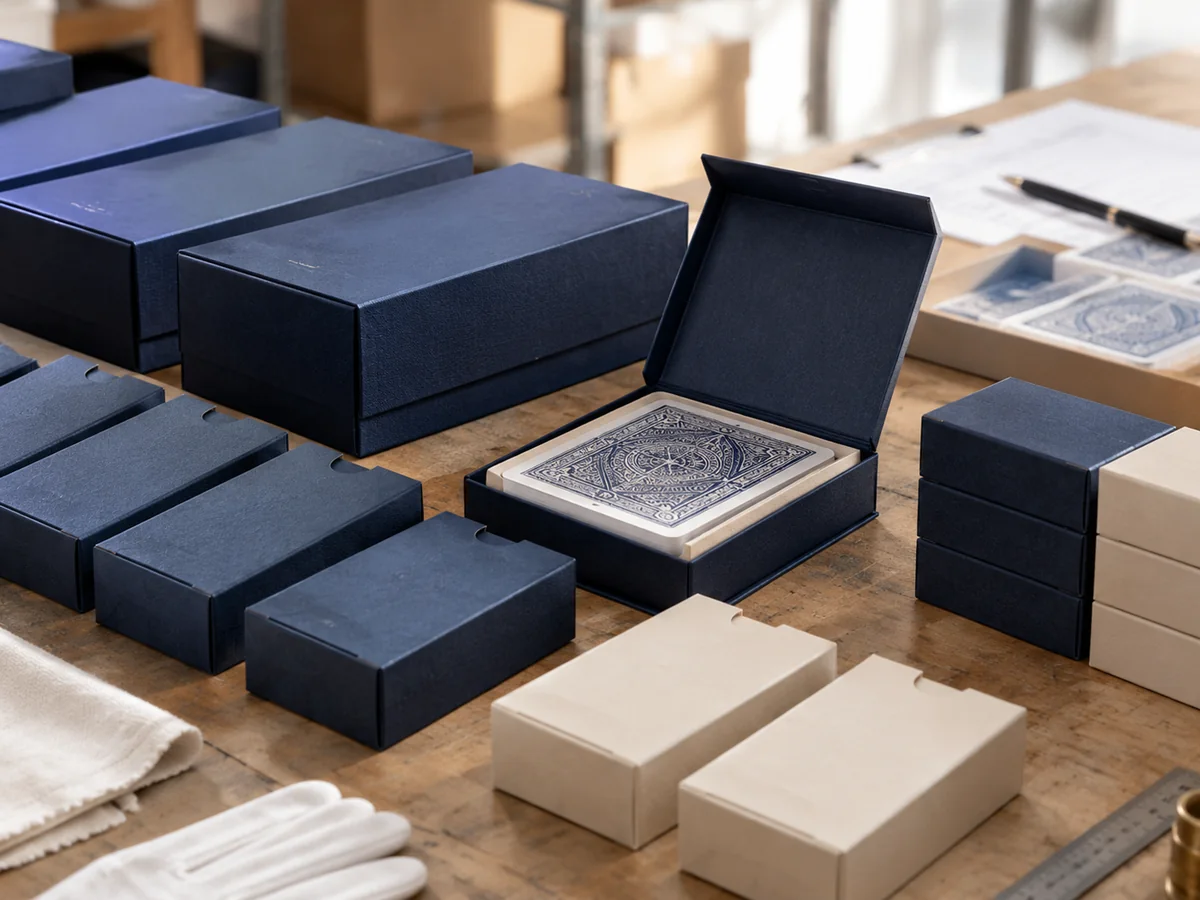
Tuck boxes are folded and glued, rigid and magnetic boxes are wrapped around greyboard, and booklets are bound. Decks, books and inserts are assembled and packed into shipping cartons here, so the last thing that happens to an order is also the last thing that can be checked. Quality control runs at each stage, and lead times explains what each one adds to a schedule.